Lithium Valley California: How Imperial County Could Become a Major U.S. Lithium Hub
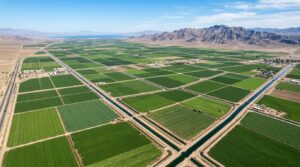
Imperial County, California, has long been recognized for its agricultural production, desert landscapes, geothermal resources, and close connection to the Colorado River. Now, the region is attracting national attention for another reason: lithium. Beneath the southern portion of the Salton Sea, naturally heated underground brine contains lithium that could help supply the growing U.S. battery industry.
This opportunity has given rise to the name Lithium Valley, a proposed center for lithium recovery, geothermal energy production, battery-related manufacturing, and associated industrial development. If the technology proves commercially viable and projects secure the necessary approvals, Imperial County could become an important part of America’s domestic critical-mineral supply chain.
However, Lithium Valley is not a finished success story. As of October 2026, commercial development remains more complicated than early forecasts suggested. Companies are working through technical, financial, regulatory, and legal challenges, while residents and environmental organizations continue to raise questions about water availability, air quality, public health, cultural resources, and the distribution of economic benefits. In August 2026, a California appeals court ordered corrections to deficiencies in the environmental review of the proposed Hell’s Kitchen project, highlighting the importance of resolving these issues before development proceeds.
For Imperial County residents, the central question is not simply whether lithium exists underground. It is whether the resource can be developed reliably, responsibly, and in a way that produces lasting benefits for local communities.
What Is Lithium Valley in California?
Lithium Valley refers to the area around the southern Salton Sea in Imperial County, where geothermal resources contain lithium dissolved in underground brine. The concept envisions more than a mineral extraction industry. It includes geothermal power generation, mineral processing, industrial infrastructure, manufacturing, workforce development, and other businesses that could emerge around a domestic lithium supply chain.
Lithium is an important material used in rechargeable batteries. Electric vehicles, laptops, smartphones, energy storage systems, and other technologies rely on lithium-based battery chemistry. As the United States seeks to strengthen domestic supply chains for critical minerals, regions with potentially recoverable lithium resources have attracted increased interest from companies, investors, and government agencies.
Imperial County has a distinctive combination of natural resources that makes this proposal particularly interesting. The region already has decades of experience generating electricity from geothermal energy, while its agricultural economy provides an established industrial and transportation base. Existing geothermal operations also offer infrastructure and technical experience that may help support future mineral recovery projects.
According to the official Imperial County Lithium Valley program, a 2023 study by Lawrence Berkeley National Laboratory, conducted in partnership with the U.S. Department of Energy, identified more than 17 million metric tons of lithium potentially present in geothermal brine in the region. This estimate indicates substantial geological potential, but it should not be interpreted as a quantity that can automatically be recovered economically. Actual production depends on extraction technology, resource characteristics, processing costs, permitting, financing, and market conditions.
The distinction matters because a large underground resource does not guarantee a successful commercial industry. Companies must demonstrate that they can recover lithium consistently, convert it into usable battery materials, and sell the resulting products at prices that support long-term operations.
Why Imperial County Is Attracting National Attention
The United States has strategic reasons to explore domestic sources of lithium. Battery manufacturers need reliable supplies of raw materials, and dependence on international mining, processing, and manufacturing networks can expose businesses to price changes, shipping disruptions, trade disputes, and geopolitical risks.
Developing lithium resources in California could help diversify the supply chain. It could also create opportunities for domestic processing and manufacturing rather than exporting raw materials for processing elsewhere and importing finished battery components later.
Imperial County’s geothermal resources offer a different approach from conventional lithium mining. Instead of relying exclusively on large open-pit mines or extensive evaporation ponds, proposed projects seek to recover lithium from hot underground brine associated with geothermal systems. That possibility has made the region relevant to discussions about cleaner energy technologies and domestic critical-mineral production.
Location is another advantage. Imperial County is connected to Southern California’s transportation network and lies near the Mexican border. Its existing agricultural economy has established experience with logistics, equipment maintenance, industrial operations, and a workforce accustomed to operating in demanding desert conditions.
Nevertheless, geographic advantages cannot resolve every challenge. Companies must still build processing facilities, secure reliable supplies of electricity and water, obtain necessary permits, and demonstrate that their operations can remain profitable through changes in lithium prices.
For a closer look at the region’s geography and communities, readers can explore our guide to Imperial County’s seven cities and communities.

How Lithium Can Be Recovered From Geothermal Brine
Understanding the geothermal resource
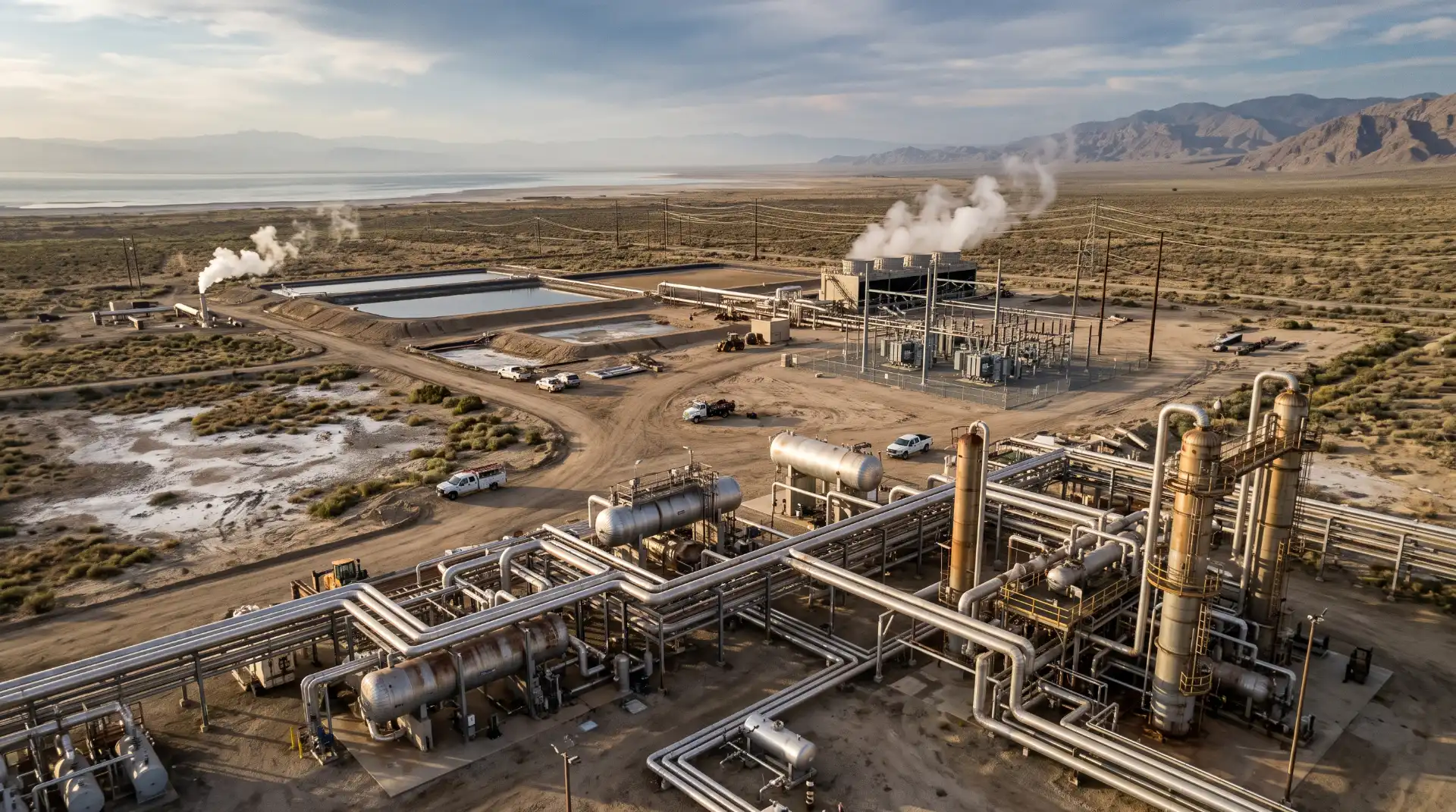
Geothermal energy uses heat from inside the Earth to produce electricity or provide useful thermal energy. In the Salton Sea geothermal field, underground fluids circulate through hot geological formations, picking up heat and dissolved minerals along the way.
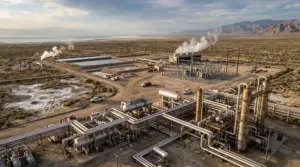
Geothermal facilities bring this hot fluid to the surface. Depending on the system, the heat can be used to produce steam or power equipment that generates electricity. After the heat has been extracted, the remaining brine may contain dissolved minerals, including lithium.
The possibility of recovering lithium from this fluid creates a potential second source of revenue from a geothermal resource. Instead of producing electricity alone, a facility could generate power and recover a valuable mineral from the same overall resource system.
That arrangement is one of the most important reasons Lithium Valley has attracted attention. If technically and economically successful, integrated operations could make better use of existing geothermal resources while helping supply materials for battery production.
What is direct lithium extraction?
Direct lithium extraction, commonly called DLE, describes a group of technologies designed to separate lithium from brine. Different methods may use specialized adsorbents, ion-exchange materials, membranes, solvents, or other chemical processes. The exact approach depends on the brine’s composition and the characteristics of the facility.
In a simplified process, operators bring geothermal brine to the surface and pass it through equipment that selectively captures lithium. The lithium is then separated from the capture material, purified, and processed into a compound suitable for further industrial use. The treated brine may subsequently be reinjected underground, depending on the design and regulatory requirements of the operation.
DLE is often discussed as an alternative to conventional lithium extraction because it may require less surface land than large evaporation ponds and could potentially operate alongside geothermal electricity generation. Some systems may also offer faster processing than evaporation-based methods.
However, the technology is not automatically low-impact or commercially successful simply because it is called direct extraction. Operators must account for energy use, chemical consumption, equipment durability, brine chemistry, waste streams, water requirements, and the environmental effects of reinjection.
A process that works in a laboratory or pilot plant may also perform differently when operated continuously at commercial scale. The key test is whether a facility can maintain reliable lithium recovery while controlling costs and environmental impacts over many years.
From recovered lithium to battery materials
Recovering lithium from brine is only one step in the supply chain. The recovered material generally needs additional purification and chemical processing before it can be used in battery manufacturing.
Commercial producers must meet demanding specifications for impurities, consistency, and product quality. A plant that successfully separates lithium may still need further equipment, specialized chemicals, testing systems, and partnerships with downstream processors to produce a commercially acceptable material.
This is why Lithium Valley’s long-term potential extends beyond extraction. If local businesses can support refining, processing, equipment manufacturing, and battery-related supply chains, a greater share of the industry’s economic value could remain in Imperial County.
At the same time, those additional activities require investment, land, electricity, transportation, water, skilled labor, and appropriate environmental safeguards. Building a complete supply chain will take coordination across several industries rather than the development of a single facility.
The Main Lithium Valley Projects to Watch
Several companies have pursued lithium recovery opportunities in the Imperial Valley. Their projects differ in ownership, technology, development stage, and commercial strategy. Their progress should therefore be evaluated individually rather than treated as evidence that the entire industry is already operating at scale.
Controlled Thermal Resources and the Hell’s Kitchen project
Controlled Thermal Resources has proposed the Hell’s Kitchen project near the Salton Sea. The concept combines geothermal energy development with lithium recovery from geothermal brine.
The project’s significance comes from its potential to demonstrate that electricity generation and lithium production can operate together in a commercial setting. If successful, the model could provide useful information for other developers considering similar geothermal resources.
However, Hell’s Kitchen has also become a major example of the regulatory and environmental questions surrounding Lithium Valley. In August 2026, a California appeals court identified deficiencies in the project’s environmental review and directed that they be addressed. Among the issues reported were the analysis of long-term water availability and potential effects on air quality associated with a shrinking Salton Sea.
That development is important because environmental review is not merely a procedural formality. It is intended to identify potential consequences, evaluate reasonable alternatives, and establish whether a proposed project can proceed under applicable law.
The ruling should not be interpreted as proof that every Lithium Valley project faces the same legal outcome. It does demonstrate that major projects must provide a defensible analysis of water, air quality, and other environmental effects before they can move forward under the applicable approval framework.
Readers can follow the county’s planning documents and project updates through the official Lithium Valley website.
Berkshire Hathaway Energy Renewables
Berkshire Hathaway Energy Renewables, through its geothermal operations in the Imperial Valley, is another major participant in the regional lithium discussion.
The company has experience operating geothermal power facilities in the Salton Sea area and has investigated the possibility of recovering lithium from geothermal brine. Its existing operations are relevant because geothermal power generation in the region is already an established industry, even though commercial lithium recovery is a separate technical and economic undertaking.
In September 2026 reporting, the company was described as advancing a demonstration-stage effort intended to help determine whether larger-scale lithium production is feasible. A demonstration plant can provide important evidence about recovery rates, operating costs, product quality, equipment reliability, and the performance of the process under real-world conditions.
Such testing is a necessary step between technical promise and a decision to invest in a much larger commercial facility. The results will help determine whether the technology can support sustained production at the scale required by battery manufacturers.
EnergySource Minerals and Project ATLiS
EnergySource Minerals has also pursued a lithium recovery project known as ATLiS in Imperial County. Its plans form part of the broader effort to develop a domestic lithium supply based on the region’s geothermal resources.
The progress of any individual project depends on its own technical design, financing, permitting, construction schedule, and commercial agreements. As a result, proposed capacity figures and anticipated employment numbers should be treated as company projections until supported by completed facilities and verified operating results.
For residents, the most useful indicators of progress include confirmed permits, construction milestones, demonstration results, financing commitments, long-term customer agreements, and the publication of reliable environmental information.
Together, these projects show why Lithium Valley remains an important development to watch. They also demonstrate why the industry’s future should be judged by measurable results rather than announcements alone.
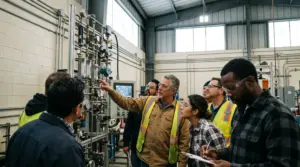
How Lithium Valley Could Create Jobs in Imperial County
One of the strongest arguments for lithium development is the potential to create jobs in a region where expanding economic opportunities could benefit families and local businesses.
Construction of large industrial facilities may require civil engineers, electricians, pipefitters, heavy-equipment operators, welders, construction managers, safety professionals, and transportation workers. Once facilities begin operating, employers may need process technicians, chemical engineers, maintenance specialists, laboratory workers, environmental monitoring staff, and plant operators.
There could also be opportunities for local businesses that provide equipment repair, catering, security, cleaning, transportation, industrial supplies, and professional services. These indirect jobs are important because economic benefits can extend beyond the companies that extract lithium.
However, the number and quality of jobs will depend on the projects that actually proceed. A construction workforce may expand temporarily during the building phase, while permanent operating positions may be fewer but require more specialized training. Some technical roles may initially be filled by workers recruited from outside the county if local candidates do not yet have the required qualifications.
That is why workforce preparation matters.
Imperial Valley College and other education and training providers could play a role in developing programs related to industrial maintenance, process technology, electrical systems, environmental monitoring, and advanced manufacturing. Partnerships between schools, employers, workforce agencies, and labor organizations could help residents prepare for positions before facilities begin hiring at scale.
Local hiring commitments and training programs are most valuable when they include clear eligibility requirements, realistic job pathways, and transparent reporting. Residents should look for information about wages, benefits, apprenticeships, career progression, and the number of positions available to local applicants rather than relying solely on broad claims about employment potential.
A successful industry should create opportunities that residents can realistically access, not simply bring temporary economic activity to the region.
Water Use: One of the Biggest Questions Facing Lithium Valley
Water is central to the future of Imperial County. The region’s agricultural economy depends heavily on Colorado River supplies, while communities and ecosystems also require reliable access to water. Any large industrial development must be evaluated in the context of those existing demands.
Although geothermal brine is the source of the lithium, industrial facilities may still require freshwater or other supplies for cooling, cleaning, chemical preparation, worker facilities, and related operations. The exact demand depends on the technology and the design of each project.
It is therefore misleading to assume that lithium extraction uses no water simply because the mineral is recovered from underground brine. The more useful question is how much water a particular facility will require, where that water will come from, how its use will change over time, and what safeguards will protect existing users.
The long-term reliability of water supplies is particularly important in a region exposed to drought, changing Colorado River conditions, and competing demands across the American Southwest. A project that can obtain water during its first years of operation must still demonstrate that its supply arrangements are credible over its intended lifespan.
The 2026 legal developments surrounding Hell’s Kitchen brought these questions into sharper focus. The reported appellate decision found that the environmental review did not adequately establish certain aspects of long-term water availability and did not fully assess how water use could affect the Salton Sea and air quality.
These are project-specific findings, but they have broader relevance to regional planning. Residents need clear information about industrial water demand, alternative supplies, conservation measures, and the consequences of reduced inflows to the Salton Sea.
Our article on sustainable farming and water conservation in the Imperial Valley provides additional context on why water management matters to the region’s existing economy.
Lithium Valley’s future will be stronger if new industrial users demonstrate that their operations can coexist with agriculture, households, and environmental restoration rather than leaving important water questions unresolved.
Air Quality and the Shrinking Salton Sea
The Salton Sea is both an ecological resource and an important part of the Lithium Valley debate. As the sea recedes, exposed lakebed can release dust into the surrounding air. Depending on local conditions and the material present, airborne dust may contribute to respiratory irritation and other public health concerns.
This issue makes industrial planning especially complicated. New facilities could bring economic benefits, but their construction and operation must be evaluated alongside existing environmental pressures.
Construction equipment, truck traffic, industrial processes, and disturbed soil can contribute to dust and emissions if not properly managed. Developers may need to demonstrate how they will control particulate matter, monitor emissions, manage materials, and reduce impacts on nearby communities.
The Salton Sea’s changing shoreline also raises a separate question: how might additional water demand affect the lake’s future? The answer depends on the source of water, the project’s consumption, existing water-management arrangements, and the complex relationship between agricultural drainage, conservation programs, and the sea’s inflows.
No single industrial project explains the Salton Sea’s decline, and lithium development should not be treated as a substitute for the broader restoration work the region needs. Nevertheless, proposed projects must evaluate how their own activities could interact with an already stressed environment.
The most useful environmental commitments are specific and measurable. Residents should be able to find information about baseline air quality, dust-control measures, monitoring locations, reporting procedures, emergency response, and the steps developers will take if results exceed applicable standards.
Publicly accessible monitoring and clear accountability can help communities assess whether promised safeguards are working in practice.
Protecting Wildlife, Cultural Resources, and Local Communities
Imperial County is not an empty industrial landscape. It includes farms, residential communities, wildlife habitat, historic sites, and places of cultural importance to Indigenous peoples.
Development around the Salton Sea must therefore consider more than the physical footprint of a processing plant. Roads, utility corridors, pipelines, transmission lines, construction noise, lighting, and increased traffic can affect surrounding land uses and sensitive resources.
The Salton Sea also supports migratory birds and other wildlife, making habitat protection an important part of regional planning. Industrial development should be evaluated in relation to wildlife areas, sensitive habitats, and restoration projects rather than in isolation.
Indigenous cultural resources deserve particular attention. Places that appear undeveloped or unoccupied to outside observers may hold spiritual, historical, or cultural importance for tribal communities. Meaningful consultation should begin early enough to identify concerns and inform project design, rather than occurring only after major decisions have already been made.
Public participation is equally important for residents living near proposed industrial sites. Communities need accessible information about expected traffic, construction schedules, noise, emergency planning, air quality, water use, and available channels for submitting concerns.
Environmental review provides a formal framework for evaluating these issues, but the quality of the process depends on the completeness of the information, the consideration of alternatives, and the responsiveness of decision-makers to documented concerns.
Economic development and environmental protection are not necessarily opposing goals. Stronger planning can help identify which projects are suitable, what mitigation is required, and which impacts cannot reasonably be avoided. The challenge is to apply those standards consistently and transparently.
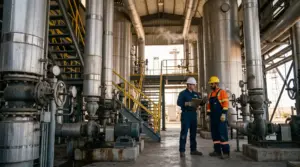
What the Lithium Valley Specific Plan Means
Imperial County’s Lithium Valley Specific Plan is intended to establish a planning framework for development around the southeastern Salton Sea area. It addresses proposed land uses and associated activities, including geothermal energy, lithium recovery, industrial infrastructure, manufacturing, and related economic development.
The county released a draft Specific Plan and accompanying Program Environmental Impact Report in December 2025. The public review period was subsequently extended to April 17, 2026, giving agencies, tribal representatives, residents, environmental organizations, and industry participants additional time to submit comments.
The plan covers a broad area and is designed to guide future development rather than approve every possible facility automatically. Its environmental review examines potential effects associated with the overall planning framework and helps establish the basis for future decisions.
Residents who want to understand the proposal should read both the planning documents and the environmental review, paying particular attention to water supply, air quality, transportation, land use, biological resources, cultural resources, infrastructure, and workforce provisions.
It is also important to distinguish a draft plan from a final adopted plan and to distinguish a planning framework from project-specific permits. Different facilities may still require additional approvals, environmental analysis, and compliance with applicable state and federal requirements.
The official county resource is available at Lithium Valley Specific Plan and Program Environmental Impact Report. Readers can use it to locate the relevant documents and review the county’s published planning information.
Understanding these materials helps residents participate more effectively in local decisions. Instead of relying on broad promotional claims or general criticism, readers can examine the actual assumptions, proposed safeguards, and unresolved questions in the planning record.
Could Lithium Valley Help Revitalize the Imperial Valley Economy?
Lithium Valley could diversify Imperial County’s economy if commercial production and associated industries become established. Agriculture remains central to the region, but a growing industrial sector could create additional employment opportunities, support technical education, and expand the local tax base.
The most substantial long-term benefit may come from building connections between extraction and other industries. Local equipment suppliers, maintenance contractors, testing laboratories, training providers, manufacturers, and transportation businesses could all benefit from sustained industrial activity.
There may also be opportunities to connect geothermal electricity production with energy-intensive industrial processes. Reliable renewable electricity could be an advantage for businesses seeking lower-carbon energy supplies, although actual emissions and energy benefits would depend on facility design, the electricity mix, and operating practices.
Still, economic diversification is not guaranteed. Projects may be delayed by legal challenges, technical difficulties, financing constraints, changes in battery technology, or lower lithium prices. Global competition can also influence whether proposed facilities remain financially attractive.
A durable economic strategy should therefore avoid relying on a single industry’s success. Imperial County can pursue opportunities in critical minerals while continuing to support agriculture, tourism, logistics, renewable energy, education, and small businesses.
The key measure of progress is not how much investment has been announced, but how much productive activity has been established and how widely its benefits are shared.
What Residents Should Watch Between 2026 and 2030
The next several years will be important for determining whether Lithium Valley moves from a promising resource concept toward sustained commercial production. Several practical indicators can help residents follow developments without assuming that every announcement will become a completed project.
First, watch for verified construction and demonstration milestones. A pilot facility, a demonstration plant, and a full-scale commercial operation represent different stages of development. Clear reporting should identify which stage a project has reached and what evidence supports claims about future production.
Second, pay attention to financing and customer agreements. Commercial plants require substantial investment, and manufacturers need dependable products that meet quality requirements. Confirmed funding, binding supply agreements, and demonstrated production can provide stronger evidence of progress than preliminary forecasts.
Third, follow regulatory and environmental decisions. Court rulings, revised environmental documents, water-supply assessments, permits, and mitigation commitments can materially affect project schedules and design. Residents should check official documents for the latest status rather than assume that an older approval or announcement remains sufficient.
Fourth, monitor local workforce programs. Training partnerships, apprenticeships, community college courses, and transparent hiring information can indicate whether residents are being prepared to access emerging employment opportunities.
Finally, look for measurable community benefits. These may include local hiring, contracts awarded to county businesses, public revenue, infrastructure improvements, environmental monitoring, and clearly defined commitments to affected communities. The quality of those benefits matters as much as the headline investment amount.
No single timeline can guarantee when Lithium Valley will become a major production hub. Technical and financial decisions will influence progress, while environmental safeguards and public accountability will shape whether development can proceed responsibly.
How Lithium Valley Could Affect the United States
The significance of Lithium Valley extends beyond California. The United States is seeking ways to make critical-mineral supply chains more resilient, and domestic lithium production could contribute to that effort if commercial facilities become operational.
A successful geothermal lithium industry could provide useful lessons for other regions where lithium-bearing brines and geothermal resources overlap. It could also help develop expertise in direct lithium extraction, mineral processing, industrial water management, and the integration of energy production with materials recovery.
However, Lithium Valley should not be presented as a complete solution to America’s battery-material needs. Domestic production would be one part of a much larger system that includes mining, refining, battery manufacturing, recycling, research, and international trade.
The long-term contribution will depend on how much lithium can be produced reliably, the cost and environmental performance of the process, and whether downstream manufacturers can use the resulting materials competitively.
For the region, the opportunity is to establish a specialized industry while developing skills and infrastructure that remain valuable even as technologies and market conditions change.
Frequently Asked Questions About Lithium Valley California
Where is Lithium Valley located?
Lithium Valley is associated with the geothermal fields around the southern Salton Sea in Imperial County, southeastern California. The county’s planning initiative covers a broader area near communities including Calipatria, Niland, and Brawley.
Why is lithium found near the Salton Sea?
Hot geothermal fluids circulate through underground rock formations and dissolve various minerals. Some of the brine in the Salton Sea geothermal region contains lithium, creating the possibility of recovering the mineral as part of geothermal operations.
Is Lithium Valley already producing lithium commercially at full scale?
The region has established geothermal electricity operations, but commercial lithium recovery has faced technical, financial, and regulatory hurdles. Project announcements, pilot tests, and proposed production capacity should not be confused with verified large-scale commercial output.
Will Lithium Valley create jobs for local residents?
Potential jobs include construction, engineering, plant operations, maintenance, laboratory work, environmental monitoring, and support services. The number of positions available to local residents will depend on which projects proceed, the skills employers require, and the effectiveness of local training and hiring programs.
Could lithium extraction affect Imperial County’s water supply?
Potential impacts depend on each project’s water demand, supply sources, technology, and operating conditions. Developers need to demonstrate that their proposed water use is sustainable and adequately evaluated alongside agricultural, residential, and environmental needs.
What is the connection between lithium and geothermal energy?
Geothermal facilities bring hot underground fluids to the surface to produce electricity. Because those fluids can contain dissolved lithium, developers are investigating whether they can recover the mineral while generating power from the same resource system.
How can residents follow Lithium Valley developments?
Residents can consult the Imperial County Lithium Valley program, county planning documents, environmental review materials, and public meeting notices. These sources help readers distinguish proposed development from projects that have secured approvals, completed construction, or demonstrated commercial production.
Conclusion: Lithium Valley’s Future Depends on More Than Lithium
Lithium Valley gives Imperial County an opportunity to participate in America’s growing demand for critical minerals while building on its existing geothermal resources. If companies demonstrate reliable extraction technology and establish commercially viable operations, the region could attract investment, create skilled jobs, and support additional manufacturing and industrial services.
Yet the resource itself is only the starting point. Water availability, air quality, public health, wildlife, cultural resources, infrastructure, financing, and regulatory compliance will all influence the outcome. The legal and planning developments of 2026 show that these concerns must be addressed with credible evidence, not left for later.
For Imperial County, the best measure of success will be whether development produces lasting local benefits while protecting the resources and communities that make the region distinctive. Residents should follow verified project milestones, review official environmental documents, and ask how proposed investments will translate into jobs, public revenue, and responsible resource management.
Lithium Valley could become an important part of the American critical-mineral supply chain, but its future remains a work in progress. The coming years will show whether the region can turn its geological potential into a durable industry that serves both the wider economy and the people who call Imperial County home.