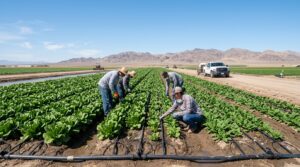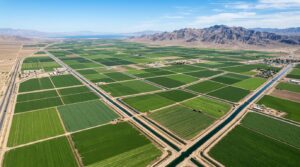
The Imperial Valley stands at the intersection of agricultural abundance and environmental challenge. This desert region produces roughly two-thirds of America’s winter vegetables while operating in one of the nation’s most water-stressed environments. As climate change intensifies drought conditions across the Colorado River Basin, Imperial Valley farmers face mounting pressure to maintain productivity while conserving precious water resources. Rather than viewing this challenge as insurmountable, innovative farmers are adopting cutting-edge sustainable practices that reduce water consumption, improve soil health, and demonstrate that desert agriculture can thrive responsibly. Their efforts offer valuable lessons for agricultural communities worldwide facing similar environmental pressures.
The Water Challenge in Desert Agriculture
Understanding the sustainability challenges facing Imperial Valley agriculture requires recognizing the region’s unique position in the American West’s water crisis. The Colorado River, which supplies water to the Imperial Valley, faces unprecedented demand and declining flows due to climate change and competing regional needs.
Colorado River Dependency and Drought
The Imperial Valley depends almost entirely on Colorado River water delivered through the All-American Canal. This single water source irrigates hundreds of thousands of acres of farmland, making the region vulnerable to changes in river flow and allocation policies. Climate change has reduced average river flows, while population growth in other western states increases competition for available water. Projections suggest that the Colorado River will face significant shortages in coming decades, requiring agricultural communities to adapt.
The question facing Imperial Valley farmers is not whether to adapt, but how quickly and effectively they can implement sustainable practices that maintain productivity while reducing water consumption. This challenge has sparked innovation across the region, as farmers recognize that their long-term viability depends on environmental stewardship.
Agricultural Water Usage Patterns
Agriculture consumes approximately 80 percent of Colorado River water in the Imperial Valley, making farming the primary target for conservation efforts. Traditional irrigation methods, including flood irrigation and furrow systems, can be inefficient, with significant water loss to evaporation and runoff. Modernizing irrigation infrastructure and adopting precision application methods offers substantial water-saving potential while maintaining or even increasing crop yields.
Climate-Smart Agriculture Practices
The UC Cooperative Extension’s Climate-Smart Agriculture program supports Imperial Valley farmers in adopting practices that address water scarcity while building resilience to climate change. These evidence-based approaches balance productivity with environmental stewardship.
Precision Irrigation Technology
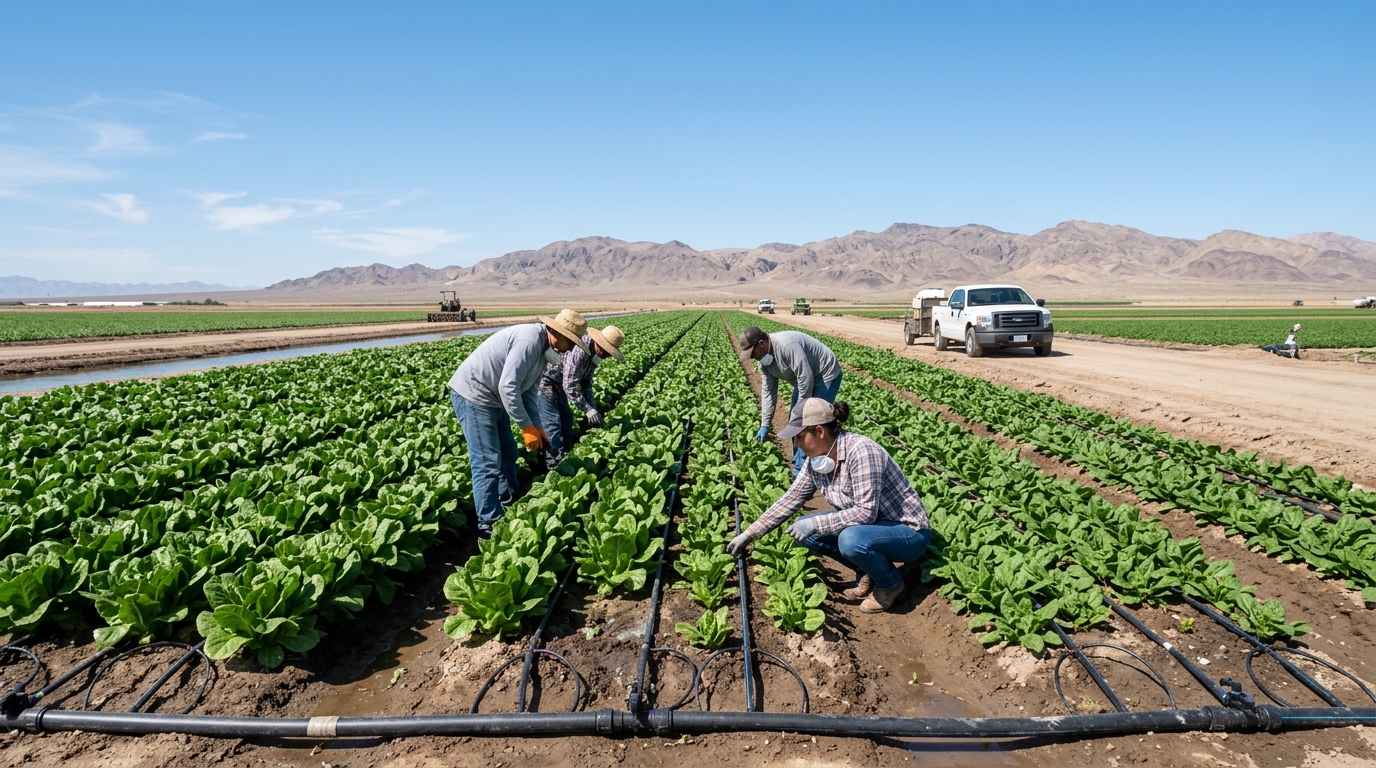
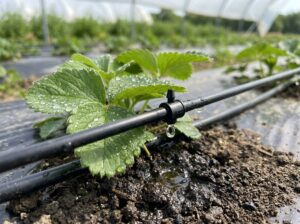
Drip irrigation systems deliver water directly to plant roots, minimizing loss to evaporation and runoff. Compared to traditional flood irrigation, drip systems can reduce water consumption by 30 to 50 percent while often increasing yields through more consistent water availability. Soil moisture sensors provide real-time data on water availability, allowing farmers to apply irrigation precisely when plants need it. This technology-driven approach transforms water management from guesswork into science-based decision-making.
Variable rate irrigation systems adjust water application based on soil characteristics, topography, and plant needs across different field areas. This precision approach recognizes that fields are not uniform — some areas naturally retain more moisture, while others drain quickly. By adjusting irrigation accordingly, farmers optimize water use efficiency across their entire operation.
Soil Health and Carbon Building
Healthy soils retain more water, reducing irrigation requirements while improving plant nutrition. Building soil organic matter through practices like cover cropping, reduced tillage, and compost application improves soil structure and water-holding capacity. Soils rich in organic matter can retain significantly more available water, reducing irrigation needs during dry periods.
Cover crops — plants grown specifically to improve soil rather than for harvest — protect soil from erosion, suppress weeds, and add organic matter when incorporated. Legume cover crops also fix atmospheric nitrogen, reducing fertilizer requirements. These practices build soil health while reducing input costs, creating economic as well as environmental benefits.
Crop Selection and Rotation
Selecting crop varieties adapted to desert conditions and implementing thoughtful crop rotation strategies reduces water and input requirements. Some crops require less water than others while maintaining market value. Rotating crops prevents soil depletion, reduces pest and disease pressure, and allows farmers to optimize water use for different crops’ specific needs.

Economic and Community Benefits
Sustainable farming practices offer economic advantages alongside environmental benefits. Reduced water consumption lowers operational costs, while improved soil health decreases fertilizer and pesticide requirements. These cost savings improve farm profitability while reducing environmental impact.
Supporting Local Communities
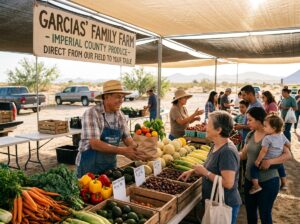
The Imperial County Farm Bureau represents approximately 600 farmers, ranchers, landowners, and agricultural professionals. This organization advocates for farmer interests while promoting sustainable practices and community engagement. Supporting local farmers through direct purchasing, farmers markets, and farm-to-table dining strengthens rural communities and ensures that agricultural income stays within the region.
Agricultural communities like Holtville, Calexico, and Brawley depend on farming’s economic vitality. When farmers succeed through sustainable practices, entire communities benefit through employment, tax revenue, and economic stability. Visitors who engage with local agriculture — dining at farm-to-table restaurants, visiting farmers markets, or learning directly from farmers — contribute to this economic sustainability.
Long-Term Viability
Sustainable farming practices ensure that Imperial Valley agriculture remains viable for future generations. Farmers who adopt these approaches demonstrate commitment to environmental stewardship while securing their operations’ long-term profitability. This balance between productivity and sustainability represents the future of agriculture in water-scarce regions.
Challenges and Ongoing Innovation
Despite progress, Imperial Valley farmers face significant challenges in transitioning to fully sustainable operations. Initial investment in new technology can be substantial, requiring access to capital and financing. Knowledge transfer and technical support are essential, as farmers need training to implement and optimize new practices effectively.
Policy and Water Rights
Water allocation policies and rights systems sometimes create barriers to conservation. Farmers who reduce water consumption may face pressure to give up water allocations, creating disincentives for conservation. Progressive policies that reward conservation while allowing farmers to benefit from water savings are essential for accelerating sustainable practice adoption.
Market Recognition
Consumers increasingly value sustainably produced food, but price premiums for sustainable products remain inconsistent. Better market mechanisms that reward farmers for sustainable practices would accelerate adoption. Certifications, direct marketing, and farm-to-table relationships help farmers capture value for their sustainability efforts.
The Future of Desert Agriculture
Imperial Valley farmers are demonstrating that desert agriculture can adapt and thrive in an era of climate change and water scarcity. Through innovation, collaboration, and commitment to stewardship, they’re proving that productivity and sustainability are not mutually exclusive. Their efforts offer valuable lessons for agricultural communities worldwide facing similar challenges.
As you explore Imperial County, consider the farmers whose work sustains both the region’s economy and America’s food supply. Support their efforts by engaging with local agriculture, dining at restaurants sourcing local ingredients, and learning about sustainable farming practices. By recognizing and supporting Imperial Valley’s agricultural innovation, you contribute to the long-term sustainability of this remarkable region.